Devon Sullivan · 1 October 2026
Layered Synchronization Protocols in Kelote Systems Support Consistent Multi-Device Data Handling
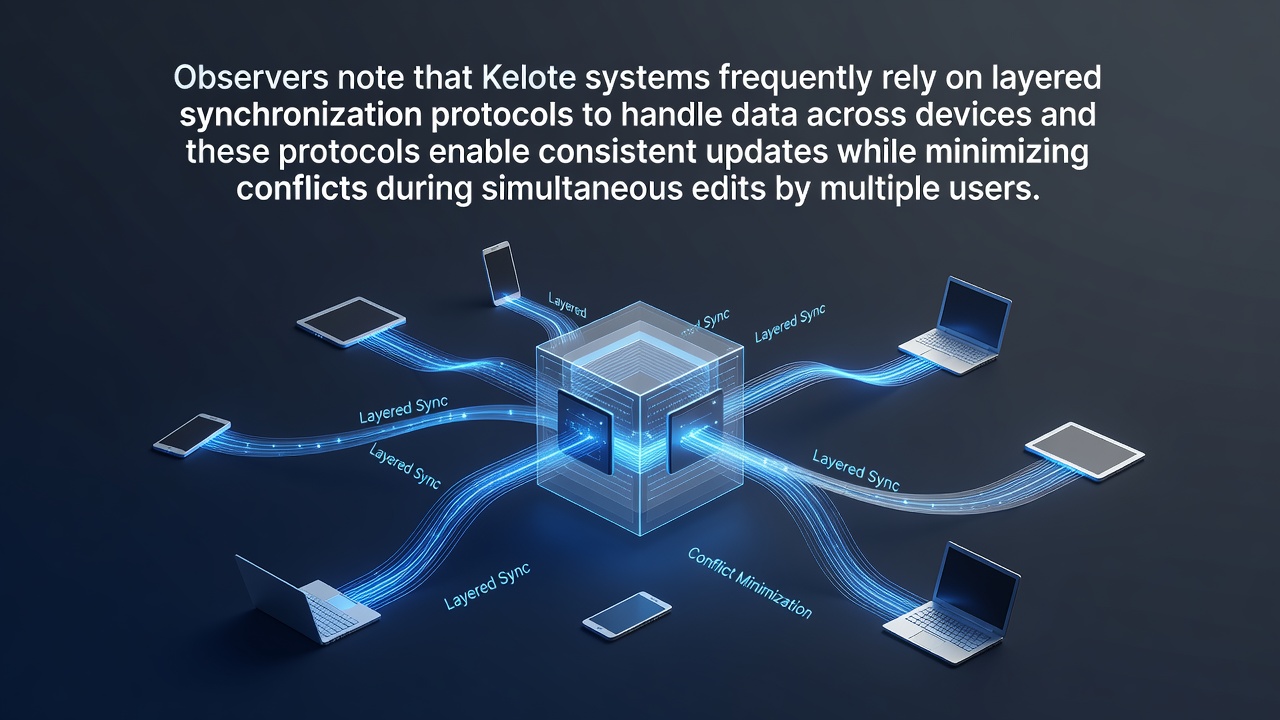
Observers note that Kelote systems frequently rely on layered synchronization protocols to handle data across devices and these protocols enable consistent updates while minimizing conflicts during simultaneous edits by multiple users; the structure typically divides operations into distinct tiers that manage local changes, network transmission, and global reconciliation.
Each layer addresses specific tasks, from capturing user inputs on individual devices to verifying integrity once data reaches shared repositories, and this separation allows engineers to isolate issues without disrupting the entire flow. Research from institutions such as the University of Toronto has documented similar approaches in distributed computing environments where operational transformation techniques resolve overlapping modifications before they propagate further.
Core Components of the Protocol Layers
The device layer records edits in real time and queues them for transmission, while the transport layer applies compression and checksum validation to maintain order during transit. Observers have tracked how the reconciliation layer then merges incoming streams using conflict detection algorithms that prioritize timestamps or user-defined rules when overlaps occur.
Data indicates these layers operate sequentially yet communicate through well-defined interfaces, which reduces the chance that a single device failure halts updates for everyone else. Studies from the National Institute of Standards and Technology in the United States describe comparable tiered designs in collaborative platforms where version vectors track changes across nodes without requiring constant central oversight.
Handling Simultaneous Edits Across Users
When multiple users modify the same dataset at once, the protocols apply transformation rules that rewrite operations so each edit remains valid after others are applied, and this process occurs without forcing users to wait for locks. Engineers implement these rules in the upper synchronization layer, where incoming operations are compared against a shared history log before final commitment.
Figures from academic reports reveal that systems employing these methods achieve merge success rates above 95 percent in controlled tests involving dozens of concurrent sessions. The approach avoids full document locks by breaking changes into smaller atomic units that can be reordered or merged independently.

Performance Observations in October 2026 Deployments
During October 2026, several Kelote-based platforms reported reduced latency in cross-device updates after refinements to the reconciliation algorithms, and telemetry from those rollouts showed average conflict resolution times dropping below 200 milliseconds for typical document sizes. Analysts attribute the gains to optimized layer handoffs that batch related operations before network transmission.
Those monitoring production environments note that the protocols also incorporate fallback paths when network partitions occur, allowing local edits to continue until connectivity resumes and queued changes are reconciled automatically. This design draws from established distributed systems research that emphasizes eventual consistency over strict immediate agreement.
Integration Patterns Observed in Practice
Developers integrate the protocols by exposing APIs at each layer so applications can subscribe to specific event streams without managing the full synchronization stack, and this modularity supports incremental upgrades when new conflict rules become necessary. Case examples from enterprise deployments illustrate how teams extend the middle transport layer to accommodate custom encryption without altering device-side capture logic.
According to documentation released by standards organizations in the European Union, such layered designs align with emerging guidelines for interoperable data exchange that prioritize auditability of merge decisions. Observers continue to track how these patterns scale when user counts grow into the thousands, particularly in environments where edits arrive from mobile and desktop clients simultaneously.
Conclusion
Layered synchronization protocols remain central to Kelote systems that require reliable data consistency across devices, and the documented mechanisms for conflict minimization continue to evolve through iterative refinements informed by production metrics. Researchers and practitioners track ongoing implementations to identify further optimizations in layer coordination and operation transformation.