
Jonas Flores · 17 September 2026
Resource Allocation Strategies for Autonomous Digital Platforms
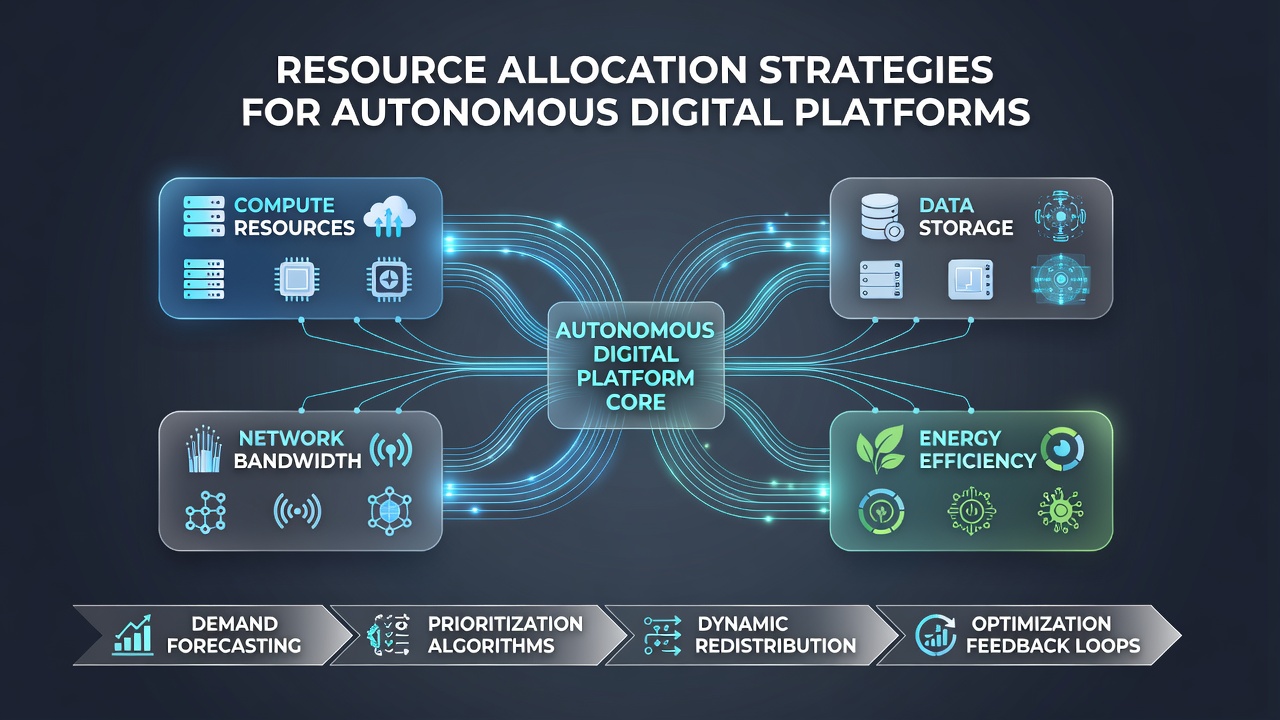
Autonomous digital platforms rely on sophisticated mechanisms to distribute computing power, bandwidth, storage, and data processing tasks without constant human oversight, and these systems have grown more complex as machine learning models guide decisions in real time. Researchers have documented how platforms ranging from cloud infrastructure providers to decentralized networks use algorithms that monitor usage patterns, predict demand spikes, and adjust allocations accordingly, while data from industry reports indicates that effective strategies reduce downtime and improve overall throughput.
Core Mechanisms Behind Allocation Decisions
One approach centers on predictive analytics that draw from historical traffic data and external signals such as user behavior trends or network conditions, adn this method allows systems to pre-allocate resources before peaks occur rather than reacting after capacity strains appear. Studies from academic institutions show that platforms employing reinforcement learning models achieve more stable performance during sudden load increases compared with rule-based systems, yet those same studies note that training these models requires substantial initial datasets and ongoing computational investment.
Another strategy involves hierarchical control layers where local nodes handle immediate adjustments while central coordinators manage broader distribution across regions, and this structure helps prevent bottlenecks in geographically dispersed setups. Observers note that platforms using this layered model often integrate feedback loops so that each layer refines its decisions based on outcomes from the others, which leads to incremental improvements over time without requiring complete system restarts.
Balancing Efficiency and Redundancy
Autonomous platforms must weigh the benefits of tight resource packing against the need for spare capacity that handles unexpected failures, and reports from the National Institute of Standards and Technology highlight how over-optimization can create single points of vulnerability when demand patterns shift abruptly. Engineers address this tension through techniques such as elastic scaling that adds or removes virtual instances based on live metrics, while also maintaining reserve pools that activate only during confirmed shortfalls.
Multi-objective optimization frameworks play a growing role as well, because they evaluate several factors simultaneously including energy consumption, latency targets, and cost constraints before finalizing allocations. Data from research papers published in 2025 reveal that platforms applying these frameworks report measurable reductions in operational expenses, though the gains depend heavily on accurate sensor data and reliable forecasting inputs.
Regional Standards and September 2026 Developments
Regulatory bodies in different regions have begun issuing guidelines that influence how autonomous platforms manage resources, and the European Commission's digital infrastructure directives emphasize transparency in allocation algorithms so that external auditors can verify compliance with fairness requirements. In September 2026, updates to these directives are scheduled to take effect, which will require platforms operating in EU markets to document their decision criteria and provide periodic reports on resource utilization equity.
Meanwhile, Canadian research initiatives supported by government agencies have focused on energy-aware allocation methods that align with national sustainability targets, and findings from those projects indicate that platforms incorporating carbon-intensity signals into their scheduling logic can lower emissions without sacrificing service levels. These efforts complement work from Australian academic groups that examine allocation under constrained connectivity conditions typical of remote areas.
Practical Examples Across Sectors
Take one large-scale content delivery network that shifted to autonomous resource management in 2024, where edge servers now decide locally whether to cache new material or fetch it on demand based on real-time popularity forecasts. The network's operators reported fewer cache misses after implementation, and similar patterns appear in financial trading platforms that allocate compute cycles to risk-model calculations during volatile market periods.
Another case involves decentralized storage networks that use token-based incentives to direct spare disk space toward files with higher retrieval demand, and data collected by the networks themselves shows that this market-driven allocation keeps popular content highly available while less-requested items migrate to lower-cost tiers automatically.
Conclusion
Resource allocation strategies for autonomous digital platforms continue to evolve through the integration of machine learning, layered control structures, and multi-objective frameworks that respond to both technical and regulatory pressures. Reports from institutions across North America, Europe, and the Asia-Pacific region document steady progress in balancing efficiency, reliability, and compliance, while scheduled updates in September 2026 are expected to standardize certain transparency practices. Those who study these systems observe that success depends on accurate data inputs, robust feedback mechanisms, and the ability to adapt when external conditions change, which keeps allocation strategies at the center of platform performance management.